Cholesterol is a waxy substance your body needs to build cells and make hormones. But when certain types of cholesterol - particularly LDL - are too high, they can build up in artery walls as plaque, narrowing and hardening the arteries. This process, called atherosclerosis, is the underlying cause of most heart attacks and strokes.
Secure your spot today · Free educational session
Global Impact
CLINICAL BENCHMARKS
Know Your Numbers
ABCs
Understanding your lipid panel is the first step in assessing cardiovascular risk. Here is what your numbers actually mean.
LDL CHOLESTEROL
Below 100
mg/dL
Lower is better
HDL CHOLESTEROL
60 or above
mg/dL
Higher is better
TRIGLYCERIDES
Below 150
mg/dL
Fasting level
PATHOPHYSIOLOGY
The Plaque Story
A silent progression from circulating particles to critical events. Understanding the mechanism is the first step in prevention.
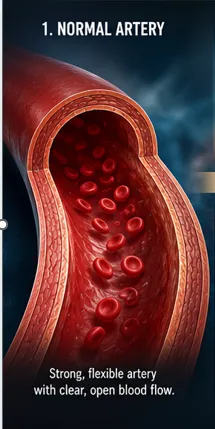
STAGE 1
Infiltration of the Artery Wall
Blood and LDL particles circulate constantly, delivering essential cholesterol to tissues. However, when levels remain elevated, excess particles penetrate the endothelium—the delicate inner lining of your blood vessels. Once trapped inside the arterial wall, these particles become oxidized, triggering the first silent steps of cardiovascular disease.
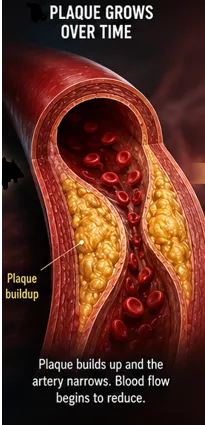
STAGE 2
Inflammation & Structural Narrowing
The immune system detects the trapped, oxidized LDL as a threat and dispatches inflammatory cells to consume it. This biological battleground forms a fat-laden core known as a plaque. Over decades, this expanding plaque narrows the artery, restricting critical blood flow and depriving tissues of oxygen without producing a single symptom.
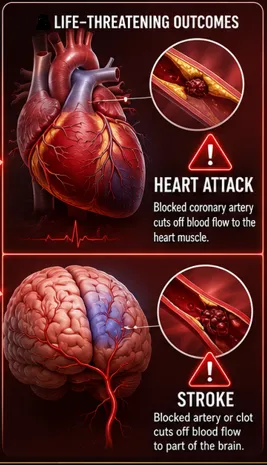
STAGE 3
Rupture & Acute Clotting
The greatest danger lies in instability. A fibrous cap separates the highly thrombogenic plaque core from the bloodstream. If this cap becomes compromised or ruptures, the body attempts an immediate repair, forming an acute blood clot. In seconds, this clot can completely block flow, resulting in a cardiac event or stroke.
THE ROI OF AWARENESS
Cost of Prevention
When comparing the minor investment of early detection against the catastrophic toll of an emergency, the mathematics of prevention are undeniable.
The CAC (coronary Artery Calcium) Scan
- Financial: ~$100–$400 one-time fee
- Biological: Non-invasive, complete clarity
- Outcome: Scheduled, calm, proactive
The Cardiac Event
Financial: $100,000+ plus lost income +/- survival
Biological: Permanent heart muscle damage
Outcome: Traumatic, reactive crisis
PRECISION MARKERS
Beyond Basic Lipids
Standard lipid panels miss critical risk factors. Understand the advanced markers that provide a complete picture of your cardiovascular health.
Lipoprotein(a) / Lp(a)
A genetically determined particle that significantly raises cardiovascular risk. Standard panels miss it entirely, and traditional statins do not reduce it. Establishing your genetic baseline is critical for precise risk assessment.
Apolipoprotein B / ApoB
A direct measurement of the total number of atherogenic particles in your bloodstream. It provides a superior, more granular prediction of plaque-building cardiovascular risk than standard LDL cholesterol concentration alone.
CAC Scoring
A non-invasive, direct CT scan that measures calcified plaque buildup within your coronary arteries. It is the gold standard for guiding treatment decisions, especially in intermediate-risk patients.
DUAL PATHWAY
Genetics vs Lifestyle
Managing cholesterol isn't a one-size-fits-all approach. It requires a balanced partnership between you and your clinician to address both environmental factors and genetic predispositions.
Treatment decisions center around a comprehensive Risk Discussion. By evaluating your age, blood pressure, and other markers alongside your lipid panel, we map out the most effective pathway to reduce your 10-year risk of cardiovascular events.
Lifestyle Modifications
Dietary changes—reducing saturated fat, trans fat, and refined carbohydrates—combined with regular aerobic exercise can naturally lower LDL by 10–30% and raise protective HDL.
Evidence-Based Medication
When genetics drive high Lp(a) or lifestyle changes are insufficient, statins are the most proven treatment for LDL reduction. Decisions are made in partnership with your clinician based on overall risk.
FAQ
Clinical Clarity
Do I need to fast before a cholesterol test?
For a standard lipid panel, fasting for 9–12 hours gives the most accurate triglyceride reading. However, non-fasting cholesterol testing is increasingly used for screening. Ask your doctor which is appropriate for your situation.
Can I have high cholesterol if I eat well?
Yes. Genetics play a major role in cholesterol levels. Familial hypercholesterolemia is a genetic condition that causes very high LDL regardless of diet. If your LDL is very high despite a healthy lifestyle, ask your doctor about genetic testing.
Are statins safe?
Statins are among the most studied medications in history and have a strong safety record for most people. Muscle aches are the most common side effect. Serious side effects are rare. The cardiovascular benefit for people at elevated risk generally outweighs the risks.
What is a 'risk discussion' and why does it matter?
Cholesterol treatment decisions are now based on overall cardiovascular risk — not just cholesterol numbers alone. Your doctor will consider your age, blood pressure, diabetes status, smoking history, and other factors to estimate your 10-year risk of a heart attack or stroke. This risk score guides whether and how aggressively to treat.
Take Action Today
Download the complete Cholesterol Worksheet and register for our upcoming expert webinar to fully understand your cardiovascular risks and take control of your heart health before it's too late.
Reviewed by Dr. Daniel L. Beckles, MD, PhD
Initiative by:
Dr. Daniel L. Beckles, MD, PhD
Cardiac and Thoracic Surgeon
DKB Advantage, LLC
Medical Disclaimer: The ABCs Challenge, including information about A1C, Blood Pressure, Cholesterol, and Screenings, is for general educational and informational purposes only. It is not medical advice, does not provide diagnosis or treatment, and does not replace care from a licensed physician or qualified healthcare professional. Participation or use of this website does not create a clinician-patient relationship.
If you have symptoms, feel unwell, or have abnormal or concerning health numbers, seek medical attention immediately. Do not wait or delay care. For emergencies, call 911 or your local emergency number, go to the nearest emergency department, seek urgent care, or contact your physician’s office right away. Do not start, stop, or change medications or treatment based on this information without consulting your healthcare professional.
The ABCs Challenge, its organizers, sponsors, partners, affiliates, volunteers, and contributors are not responsible, to the fullest extent permitted by law, for any harm, injury, delay in care, neglect of care, missed diagnosis, adverse outcome, or damages arising from use of this information or failure to seek appropriate medical attention..
Data Sources: WHO (2023), PAHO/WHO (2022), CARPHA (2023), World Obesity Federation (2023), IARC (2016).
© 2026 Know Your ABCs Challenge. PRIVACY POLICY